The new reality of the Arts in Louisville can be boiled down to a single word: “survival,” and The Kentucky Opera is doing what it takes to survive. I applaud them.
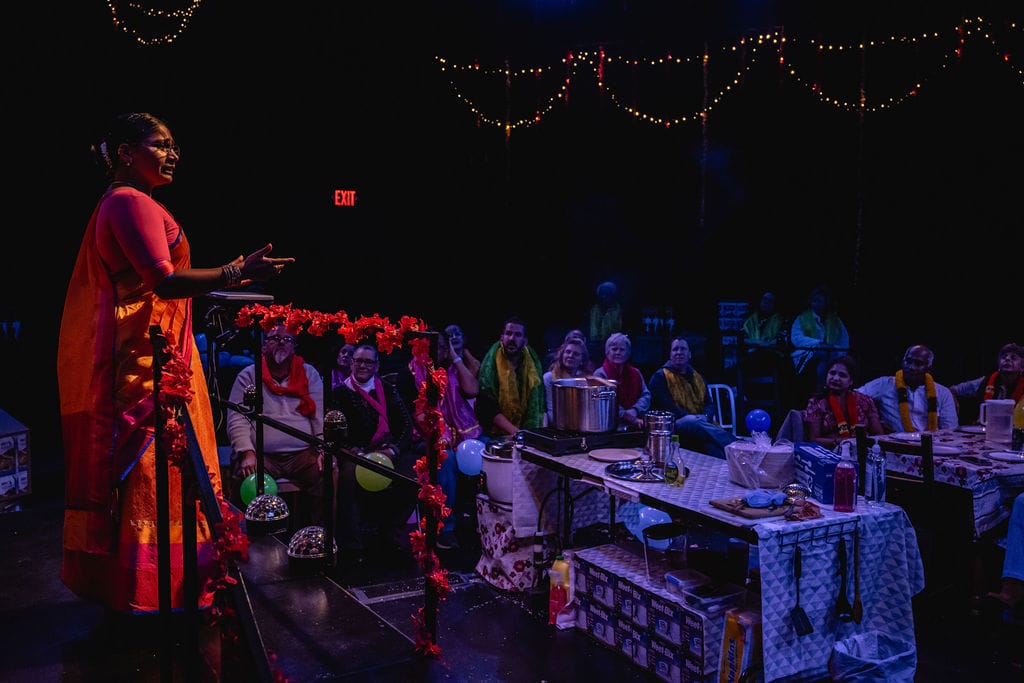
Last night’s production of Pygmalion wasn’t performed in a grand theatre. It wasn’t backed by the shimmer of chandeliers or cushioned by the velvet seats of the past. Instead, it unfolded in a converted warehouse — raw, makeshift, and undeniably alive. It was also, undeniably, beautiful. That contrast tells us everything we need to know about the state of the performing arts in Louisville.
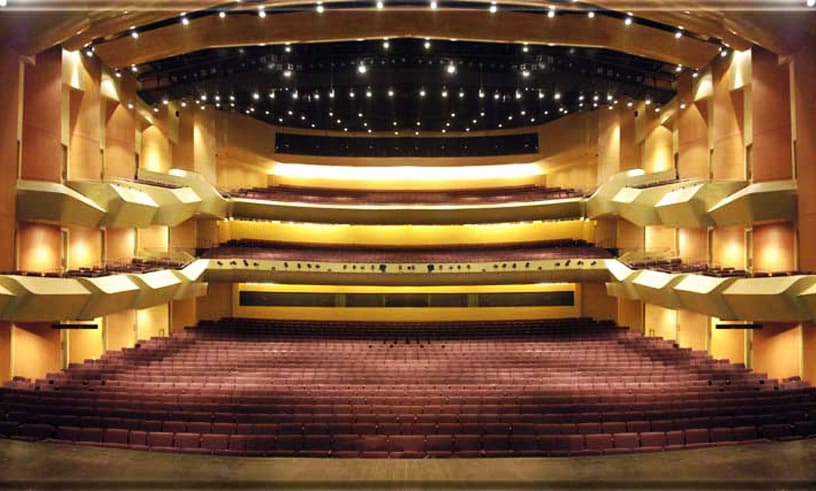
There was a time — not long ago — when Kentucky Opera called Whitney Hall home. A venue worthy of the sweeping power of Puccini and the delicate subtext of Shaw. Then came the move —no, let’s say transition — to the Brown Theatre. And now, like so many local arts organizations, they are creating meaning in non-traditional spaces. What could be seen as a fall from grace is, in truth, a testament to the tenacity of the artists and leaders who refuse to let this city’s cultural flame go out.
But let’s be honest: the flame is flickering.
Audiences are declining. Venues are vanishing. The cost of performance spaces — both professional and practical — is climbing, while funding, donor support, and reliable patronage are steadily eroding. Too many organizations are asking too much from too few, and the cultural heartbeat of Louisville is growing faint.
We can’t ignore the math: our longtime season subscribers are aging out or passing on, and the next generation isn’t stepping in fast enough to replace them. The idea of a “season ticket holder” is fast becoming a relic, and the pandemic accelerated an already pressing problem — getting people to leave their houses for live theatre.
Meanwhile, the cost of tickets, rights, labor, and rentals is soaring. We face a real challenge: how do we keep live theatre accessible when it’s becoming increasingly unaffordable to create?
More importantly, how do we rebrand the arts? How do we make them appealing, essential, and exciting again for new audiences? How do we convince a streaming-obsessed, algorithm-fed generation that sitting in a dark room with strangers watching something unfold in real time is not only relevant — but revolutionary?
Are we as a city, as a society, at a point where we want to be entertained, but not challenged? Has art with a social conscience fallen out of favor? Or are we simply not asking the right questions, not marketing the right way, not daring enough in our programming?
These are the questions that keep artists up at night. And yet — despite all odds — they keep creating.
That’s what I witnessed last night. Kentucky Opera’s Pygmalion was elegant, joyous, and smart. It was born of imagination and resourcefulness, not opulence. And that is what Louisville’s arts community does best. Our artists think outside the box because, quite frankly, we can’t afford the box anymore.
And so we pivot. We rehearse in church basements and black boxes, we perform in parks and parking lots. We teach, we hustle, we rewrite grants, we chase sponsors, and we beg people to come see something real.
For that, the artists of this city deserve a standing ovation.
Particularly Barbara Lynne Jamison, Kentucky Opera’s General Director and CEO. Her ability to adapt, inspire, and still deliver high-caliber, thought-provoking productions under increasingly difficult circumstances should be seen as a model — not just for the arts, but for leadership itself.
The Kentucky Opera is surviving. But survival is not the end goal — it’s the floor, not the ceiling. The question now is: will Louisville show up to help its artists not just survive, but thrive?
If we want to remain a city of substance — not just of sports and bourbon — we must invest in the arts with our money, our attention, and our time. Otherwise, the curtain may rise one day, and no one will be left to applaud.
Read More From Jason Cooper and Support His Work on Substack Here: https://jgcoop01.substack.com/.