
Tenderness, mercy, and righteous justice flow through Bassam Tariq’s new film, Your Mother Your Mother Your Mother, which stars Mahershala Ali as Latif, a devout Muslim who experiences a crisis of faith and navigates familial struggles while also working as a sword-wielding hitman. This film came into existence partially to make use of the sword training Ali had done for the unproduced Blade reboot that Marvel Studios failed to get off the ground. Tariq, who was initially attached to direct Ali in Blade, teams up with the actor for a movie that is more richly textured and emotionally resonant than any Marvel project has been in quite some time.
Ali’s Latif has lost his wife and now struggles to provide for his family, especially being able to acquire breastmilk for his infant daughter. Family members and spiritual mentors (including Giancarlo Esposito in a softened, aged performance) try to guide Latif, but a threat from an evangelical militia (led by John Cho as an entertaining, near-cartoonish antagonist) leaves him with no choice but to live by the sword.
Despite the unique real-world origins of Ali’s interest in sword combat, Your Mother Your Mother Your Mother is not exactly an action movie. It would be a mistake to go in expecting Ali to slice dozens of guys to pieces. This is not Kill Bill. But what it lacks in gonzo-bloody action, it makes up for with a thematically complex human drama about faith and family and community. Tariq and Ali beautifully stage and artfully execute the action when it does come. Ali is like a samurai, graceful and effortlessly captivating in the moments where everything kicks off.
Your Mother Your Mother Your Mother is one of the best looking movies of the year, with a terrific lead performance and so much heart and soul poured into every detail. Tariq writes the familial interplay so organically, making this one of a very few movies that accurately captures how teens and Gen Z’ers tend to communicate with each other. This movie is not easy to find everywhere. It has had a gradual rollout to a minimal number of cities over this past month, but you absolutely should see it if you are able to.
8/10
Your Mother Your Mother Your Mother is now playing in theaters in Louisville.
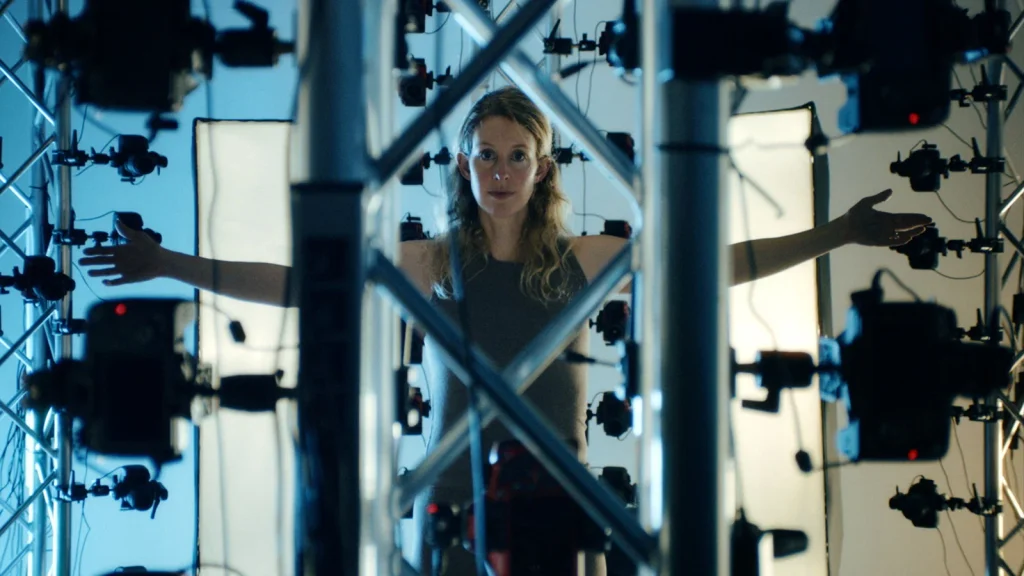
The movie event of the year crept up on us just a few weeks ago when Nathan Fielder and Lance Oppenheim’s You Can See Everything was surprise-screened at a festival without any prior marketing. In the days following, the internet exploded with anticipation and hype for this three-hour odyssey into the heart of an impenetrable figure. Fielder, who has made a career in comedy and television exploring the blurred lines between fiction, reality, performance, and identity, lived with convicted Theranos-fraudster Elizabeth Holmes and her partner, Billy Evans, for the 34 days before her prison sentence began. The result is a psychological whirlwind of manipulations, unclear motives, journalistic ethics being bent or broken, and dozens of genuine WTF-moments. This will draw gasps and laughs out of the audience.
You Can See Everything is mind-bending in form and style. Oppenheim and Fielder make a film that acts at once as a comedy, a psychological thriller, a devastating family drama, a documentary, and something beyond all of this, something that defies genre entirely. The long-and-short of it is that this film is a must-watch.
For those who might find another piece of media covering Holmes to be redundant or exhausting, this movie is not what you think. You Can See Everything is about Elizabeth Holmes in some respect. But what this movie is really about is the art of manipulation itself, how we can never know someone’s true motives, the degree to which a person sitting across from us may be performing a character. These ambiguities in between human interaction draw Fielder into a house of mirrors, reflecting on each word and each glance with a creeping feeling that something more sinister must be going on.
At the point in the film where Holmes’ prison sentence begins, something fascinating happens. Fielder is now left without access to his documentary subject. This is where the journey to understanding the movie really begins, and it must be seen for yourself.
Oppenheim and Fielder bring a uniquely cinematic style to this movie. The ultra-wide or long lens cameras allow for shots that feel so intimate or so artfully composed that they seem like they must have been rehearsed ahead of time. This plays wonderfully into the film tearing down our perception of what “truth” means.
The subjects have their own truth. The filmmakers have their own truth. The cameras have their own, and perhaps most importantly, the audience has their own as well. One of the most amazing things about You Can See Everything is that no two people seem to agree on what exactly is happening. Everyone has a different interpretation of who is in control and what the takeaway is.
You Can See Everything is one of the most audacious and provocative movies released this century. A boundary-pushing work of art that will have you stewing for days, desperate to talk to others about every little detail. Oppenheim and Fielder made a movie here that is truly unlike anything you have seen before.
10/10
You Can See Everything is now playing in theaters in Louisville.