By Dr. Brandon Mccormack
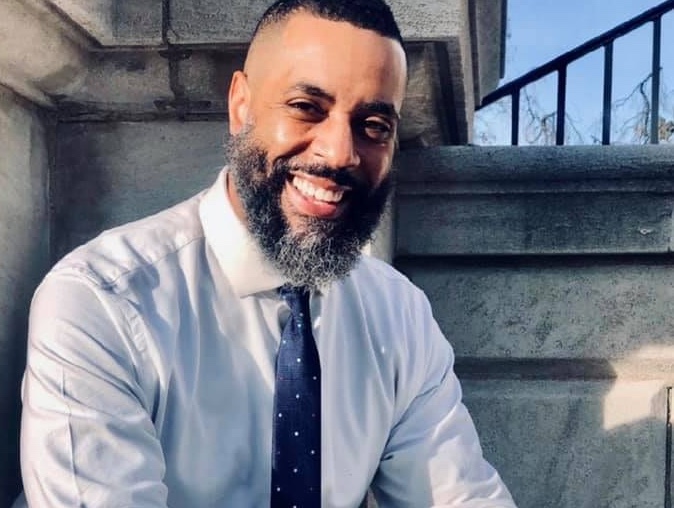
Pan-African Studies Professors at UofL are fighting what they feel is the University attempting to dismantle the PAS department. The following comments are an email from UofL to faculty and the response from Dr. Michael Brandon Mccormack, chair of Pan-African Studies.
Originally Posted via Facebook on Friday, Feb. 20
LONG POST ALERT: This morning, the Dean of the College of Arts & Sciences sent an email to faculty and staff addressing the PAS graduate program. Later today, the President and Provost sent that email to the entire University of Louisville Community. I am not authorized to “Reply All” to these emails. But because the latter email went out publicly, and I, as chair of the Pan-African Studies department, am referenced, I am posting their email and my initial response to the Dean below. Thank you to everyone who has reached out to voice your concern and support. We will need you to stand and fight and then build and create with us!
Email from the University:
Dear University of Louisville Community,
We are writing to correct misinformation circulating publicly regarding recent Graduate Teaching Assistant (GTA) reductions in the College of Arts & Sciences.
All graduate student-serving colleges at the university were affected by mandated GTA reductions, announced with extremely limited lead time. Across the institution, only open GTA lines were eligible for reduction, significantly constraining available options.
Within Arts & Sciences, decisions were based on a comprehensive review of program performance data, impact on undergraduate instruction, and strategic academic needs. This analysis and the resulting decisions were communicated transparently and in full to all department chairs and directors of graduate study at the time of the announcement.
As explained then, temporary admissions pauses were additional considerations for three PhD programs. One program had paused admissions in 2025 to focus on curriculum adjustments and was protected from GTA cuts in 2026 so they could reopen admissions. For 2026, given the required reductions, performance data and the need for similar strategic planning, two doctoral programs paused admissions.
Public claims that the pause of doctoral admissions in Pan African Studies (PAS) reflects an effort to close or undermine the department are categorically false. The PAS PhD program has faced several years of low applications and enrollments, resulting in all allocated GTA lines for 2026 being unfilled. While seven students were admitted in 2025, only one accepted, and that student was ultimately unable to enroll. Because only unfilled GTA lines were eligible for reduction, these lines were returned to the Graduate School for 2026.
The announcement to A&S departments openly communicated that this admissions pause was intended to be used strategically, particularly to address enrollment declines in the undergraduate PAS major — from 30 majors in 2020 to 7 majors in spring 2026 — and the associated budgetary pressures. Strengthening undergraduate enrollment is central to the department’s long-term vitality and mission.
It is also important to note the harmful impact of misinformation on our students. Public calls for students interested in Black Studies to avoid the university, as have been widely and frequently communicated in recent months, will only serve to further depress enrollment in this historic program, undermining the growth necessary to sustain its impact.
At the time of the college-wide GTA communication, the department chair of PAS was also contacted directly and invited to meet individually and with the department to plan enrollment growth and program development. While an individual meeting occurred, a department-level meeting has not yet been scheduled.
The College of Arts & Sciences remains fully committed to supporting student engagement in Pan-African Studies, particularly at the undergraduate level, which represents the heart of our institutional mission. These decisions were made with the long-term health of our academic programs and students squarely in mind.
Sincerely,
Gerry Bradley, President
Katie Cardarelli, Executive Vice President and University Provost
Dayna Touron, Dean, College of Arts & Sciences
MY RESPONSE:
Dear Colleagues,
Dean Touron and I have enjoyed a positive professional relationship to this point, and I trust that relationship will survive this moment. With that said, it is imperative that I respond, at least in part, to this email. There is much to be said, but this is not the forum for that full discussion.
It is not my intention to debate claims of “misinformation” being circulated in public, but rather, as chair, I will speak to my own experience of, and perspective on this decision, how it was communicated, and its impacts on our department.
Let me be clear: I was blindsided by the decision to eliminate all graduate assistantships in Pan-African Studies and to place our graduate program on “pause.” We were told to prepare for an approximate 10 percent reduction in assistantships across the College of Arts and Sciences, not the complete removal of support from a single department, and there was no prior indication that a decision of this magnitude was under consideration. As chair, I learned of this decision at the exact same time as everyone else, although our department was the most significantly impacted, bearing the brunt of the loss of assistantships. Although the Dean did, in fact, contact me to set up a meeting once the decision had been made, a decision this drastic warranted nothing less than the courtesy of a heads-up. The demoralizing effect of this decision upon our faculty simply cannot be overstated in a moment when Black faculty, staff, and students already feel abandoned, if not betrayed by our university.
While the administration has described this as a temporary pause, it is difficult to see how a graduate program can meaningfully continue without assistantship support, especially when we have been told that these lines are unlikely to be returned. The uneven and disproportionate way these cuts were implemented raises serious concerns about how financial pressures are being distributed and which programs are bearing the greatest burden. With additional conversations on the horizon about looming budgetary cuts to the College, how could anyone not believe that PAS would also bear a disproportionate loss with such cuts? Losses that would likely permanently destabilize the department and lead to its demise. So, while there might not be intent to dismantle PAS, it is not unreasonable to foresee a series of top-down decisions, made in a similar manner as these GTA decisions, leading to that effect. PAS might not be targeted by the university, but neither has it been protected in this political and budgetary climate.
More fundamentally, the value of Pan-African Studies cannot be captured by enrollment data alone. Numbers need narratives, and there is no narrative to be told about PAS (both graduate and undergraduate programs) that does not include administrative decisions dating back to at least 2018, which have led to the sharp decline in our enrollment. Nevertheless, the onus has been placed back on the department, suggesting that we are simply not inspiring students to take our classes, not offering them high-quality educational experiences, and that we have simply “given up.” I will state emphatically that such claims are categorically false. I speak for myself here in saying that I, personally, and my colleagues, have worked tirelessly to attract students to our program in the face of significant challenges that will have to be detailed elsewhere.
For decades, the department has had a transformative impact on students, the university, and the surrounding community. I speak not only as chair of the department, but as a University of Louisville alum whose life and career were made possible, in no small part, by the education I received through Pan-African Studies.
There is so much more to be said, but this space cannot hold it all. For now, I hope our colleagues will agree that PAS is too valuable to this university and community to be viewed only in terms of data analytics. I hope we will all be committed to the investments needed to ensure that our department survives and thrives well into the future.
To those who have reached out, we appreciate your concern and continued support. As always, I welcome further dialogue and conversation.
Sincerely,
Brandon
Dr. Michael Brandon McCormack is Professor and Chair of Pan-African Studies and Professor of Interdisciplinary and Public Humanities (Religious Studies) at the University of Louisville. He earned his Ph.D. in Religion from Vanderbilt University in 2013. His research explores the intersections of Black religion, popular culture, the arts, and activism, with publications in leading journals and edited volumes. A former Director of the Anne Braden Institute for Social Justice Research, he is recognized for advancing community-engaged scholarship. His leadership and service have been honored nationally, including induction into the Morehouse Collegium of Scholars and Louisville’s Distinguished Faculty Award for Service.